
How we clean
A coastal-grade clean, step by step.
Coastal glass is a different problem, so we clean it differently — loosen the grime, then rinse with pure water so it dries clear on its own.
- 01
We read the glass
Every visit starts by checking for heavy coastal buildup and bonded hard-water spotting, so we use the right approach on each window.
- 02
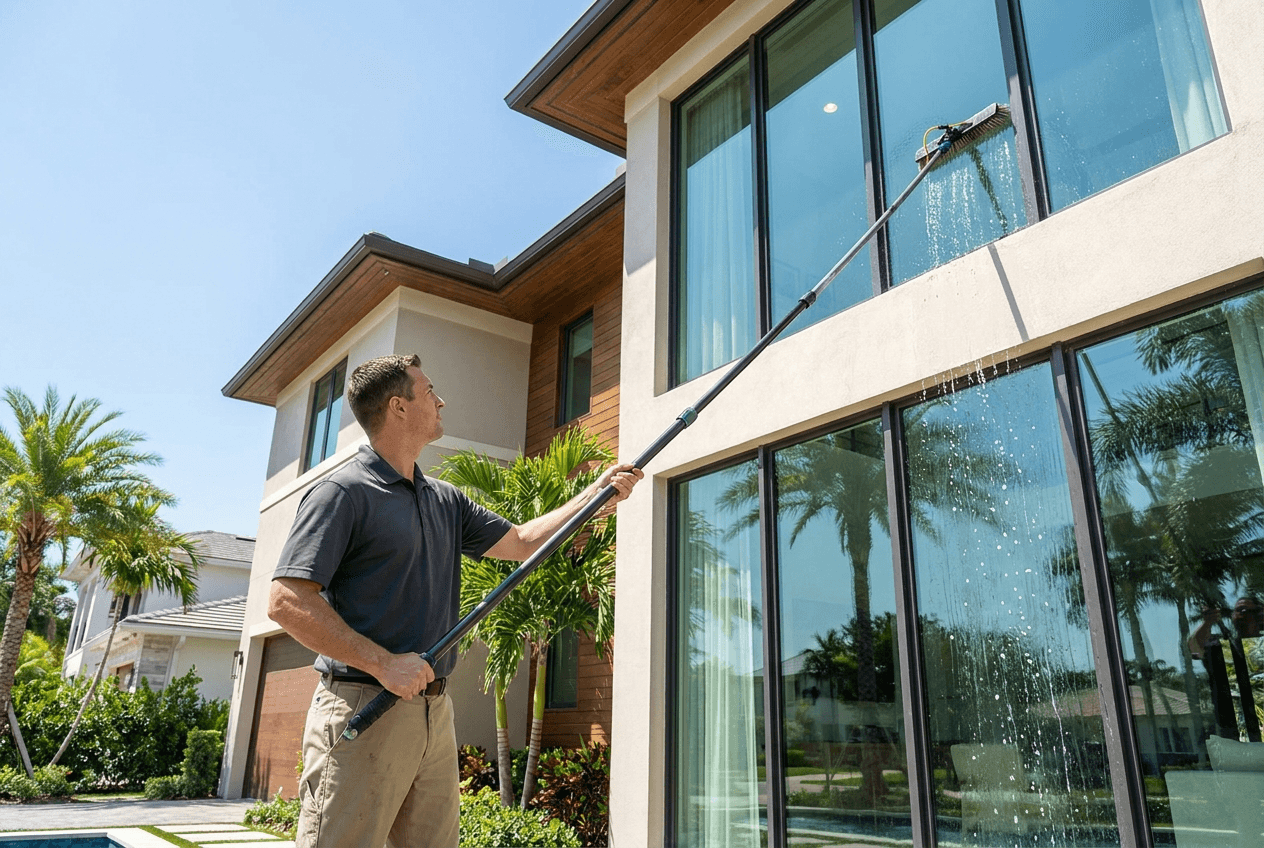
Water-fed wash
A brush on a water-fed pole agitates and loosens the grime while pure water floods the surface — reaching upper-story glass from the ground, no ladders against your home.
- 03
Pure-water rinse
We rinse with deionized water that carries no minerals, so there is nothing left to dry into a spot. The glass dries clear on its own.
- 04
Hand finish where it counts
Ground-floor and interior glass gets the traditional strip-wash and hand squeegee, pulled in clean passes for a streak-free finish.
The part that makes the difference: the water
Most cleaners rinse with whatever comes out of the hose — and tap water here is full of dissolved minerals. The window looks great wet, then dries spotty because the minerals stay behind.
We run our water through a deionization tank first. It strips out the calcium, magnesium, and salts that ordinary water leaves as spots, so what reaches your glass is pure, near-zero-mineral water. With nothing left in it to dry, there is nothing to leave a spot or film — the glass dries clear on its own. For bonded spotting that has already set on, our hard-water stain removal lifts it off first.
A note on honesty: pure water rinses clean and dries spot-free — it does not coat, seal, or treat the glass. The protection comes from the recurring rhythm removing buildup before it sets, not from anything left on the window. And we cannot reverse glass that has already etched — we keep the salt from getting there.
How our process works
What does the deionization (DI) tank actually do?
Will steel wool scratch my windows?
How do you reach high windows?
Why does Salt only do recurring plans?

Ready for clear glass, kept that way?
See your price in seconds — no contract, and every visit is backed by our 365-day guarantee.